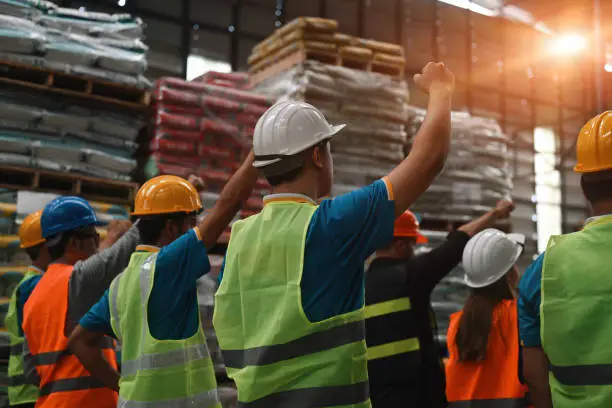
South Africa is bracing for a turbulent labour period as the Solidarity union has escalated its standoff with the government by filing a formal dispute at NEDLAC, warning of a potential retrenchment wave exceeding 200,000 jobs. With the unemployment rate standing around 46 percent, the stakes of the Solidarity Clash are exceptionally high, and the dispute is drawing national attention.
Union leaders argue that unresolved policy failures, inadequate reforms, and deteriorating business confidence have placed several industries on the verge of large-scale staff reductions.
Economists say the looming crisis is being intensified by global instability following the G20 summit, where shifting trade patterns and geopolitical uncertainty created deeper challenges for emerging markets already struggling with structural weaknesses.
What Happened?
The confrontation grew after Solidarity announced that it had lodged a formal dispute at the National Economic Development and Labour Council. The union maintains that its previous engagements with government representatives proved unproductive, with repeated warnings about declining industry resilience going unanswered.
According to Solidarity, major sectors are preparing restructuring plans that could result in widespread retrenchments. Among the most vulnerable sectors are:
- Mineral extraction and mining
- Manufacturing and industrial production
- Transport and logistics operations
- Telecommunications and infrastructure services
- Private security
- Retail-related service industries
Union analysts claim employers are grappling with rising input costs, persistent energy disruptions, port congestion, and unreliable policy direction—all of which limit their ability to maintain workforce levels.
Labour specialists note that the crisis did not emerge overnight. Instead, it reflects deeper structural challenges, long-standing delays in economic reforms, and an environment where businesses struggle to forecast costs or plan long-term investment.
Why Solidarity Triggered a Formal Dispute
Solidarity’s decision to escalate reflects a breakdown in trust between the union and the state. Union leaders say they have consistently provided data-driven warnings, including evidence of declining production output, lower investment appetite, and weakening export performance. They argue that government responses were slow, fragmented, or inconsistent with economic realities.
The union highlights several core concerns:
- Stalled economic reforms that continue to deter investment.
- Regulatory contradictions across key departments.
- Governance weaknesses in state-owned entities affecting labour stability.
- A lack of proactive engagement with labour analysts as crisis signs grew.
Solidarity insists the government failed to anticipate shifts in the global economy following the G20 summit—shifts that have altered global supply chains, redirected manufacturing flows, and reduced export opportunities for economies reliant on primary sectors.
By filing a dispute at NEDLAC, Solidarity has opened the door to further escalation, including arbitration, legal action, coordinated national protests, or even sector-specific strikes if government engagement does not improve.
Government’s Response So Far
Government officials at NEDLAC say they recognise the severity of the situation but maintain that external pressures—including global trade realignment, energy price volatility, and softening international demand—are contributing significantly. They insist that the government is not ignoring the crisis and is preparing interventions to ease economic pressure.
Officials state that:
- Labour-support measures are currently being designed.
- Revised industrial strategies will be announced in the coming months.
- Consultations with labour and business will continue through NEDLAC.
One spokesperson explained that the global economic environment has tightened faster than policymakers anticipated, making it more difficult to cushion domestic industries.
Solidarity strongly disagrees, arguing that slow policy execution and weak institutional capacity are the central drivers of business instability. The union insists that South Africa’s domestic policy environment—not external conditions alone—has deepened the employment crisis.
Economic Context and Global Pressures
South Africa’s economy is under immense pressure from both external shocks and internal dysfunction. Since the G20 summit, global trade shifts have forced many countries to adapt to:
- Changing manufacturing locations
- Increased protectionism
- Realigned supply chains
- Decreased commodity demand
- Intensified competition among emerging markets
Domestically, businesses must navigate:
- Load-shedding and energy instability
- Escalating transportation and fuel costs
- Delays at major ports
- High operational expenses
- Weak consumer spending patterns
- Ambiguous policy directions in key growth sectors
Economic experts argue that the combination of global trade turbulence and domestic inefficiency has created a situation in which mass retrenchments may be unavoidable unless government responds rapidly and decisively.
The Solidarity Clash is ultimately a symptom of broader structural tensions within the economy, reflecting years of deferred reforms and declining investor confidence.
Projected Job Losses by Sector
Early modelling from labour economists and industry groups reveals worrying projections:
- Mining: Between 35,000 and 40,000 jobs threatened due to production disruptions and declining commodity markets.
- Manufacturing: Roughly 70,000 potential losses as factories reduce operations.
- Transport & Logistics: Around 30,000 jobs at risk as shipping delays and port inefficiencies worsen.
- Private Security: Approximately 25,000 positions vulnerable as businesses cut contracts.
- Retail & Services: Nearly 40,000 roles endangered due to shrinking consumer spending.
Solidarity warns that these figures might represent only the initial impact. Without intervention, a broader employment contraction could unfold across supporting industries, affecting suppliers, contractors, and small businesses reliant on stable sector activity.
Public Reaction and Social Media Debate
News of the dispute has triggered widespread conversation across South African social platforms. Many users express concerns over rising economic pressure and warn that job losses of this magnitude would deepen poverty and strain already struggling households.
Trending tags such as #SolidarityClash, #SAJobsCrisis, and #RetrenchmentAlert reflect public anxiety and amplified calls for urgent reform. Workers fear instability in their industries, while business owners urge government to restore predictability and reduce regulatory bottlenecks.
Activists, political commentators, and economists are calling for more transparency in government planning and for faster implementation of long-promised reforms that could incentivize job growth.
What Happens Next
The next steps depend heavily on whether negotiations at NEDLAC gain traction. If the two sides remain apart, several outcomes are possible:
- Coordinated strike actions in highly affected sectors
- Escalation to arbitration through formal channels
- National protests driven by labour federations
- Further withdrawal of investor confidence, worsening job losses
Analysts caution that prolonged conflict could weaken the country’s already fragile economic stability and undermine prospects for recovery.