Introduction
The G20 Declaration adopted in Johannesburg closed a highly symbolic summit that mixed unity with visible strain.
Leaders agreed on a 30-page text that stresses solidarity, equality and sustainable development, reflecting South Africa’s drive to push Global South priorities into the heart of global decision making.
Yet behind the diplomatic language, tensions with the United States cast a shadow over the closing moments. A protocol snub, the absence of a US president and quiet resentment over Washington’s stance meant that a Dirco official, not President Cyril Ramaphosa, handed the document to the US chargé d’affaires.
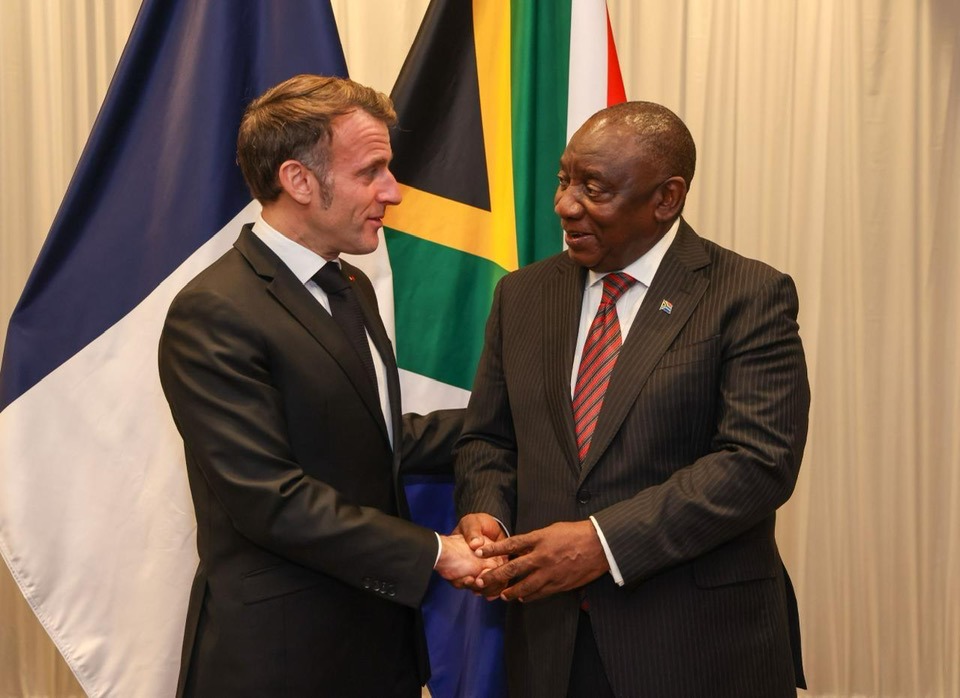
French President Emmanuel Macron then stepped forward to frame the outcome as a sign that the rest of the world will not wait for US approval.
G20 Declaration Framed Around Solidarity and Equality
G20 Declaration architects presented the text as a response to an unequal international system.
The 30-page document emphasises fair development, inclusive growth and a stronger voice for emerging economies. Phrases about solidarity and equality were not simply decorative. They were designed to reassure countries that have long argued the rules of global finance and trade are tilted in favour of richer states.
The declaration highlights commitments to address poverty, climate vulnerability and uneven access to technology and finance. It also stresses that global rules must work for all regions, not just traditional power centres.
For South Africa and its partners, this framing was essential. It signalled that their concerns are no longer side notes in communiqués but central themes around which future cooperation will be judged.
G20 Declaration Elevating Global South Priorities
G20 Declaration negotiations were shaped by South Africa’s determination to centre the Global South.
From the outset, Pretoria pushed for language that reflects the realities of countries facing debt stress, climate impacts and development gaps. This meant placing issues such as fair access to finance, reform of multilateral institutions and just energy transitions near the top of the agenda.
Many emerging economies have grown frustrated with slow progress on past promises. The declaration responds by calling for more balanced representation in global forums and clearer pathways for development financing.
For African states and other developing countries, this outcome was more than symbolic. It indicated that host nations from the South can use the G20 platform to shift debates away from narrow power politics and toward the everyday challenges of billions of people.
G20 Declaration Adopted Amid US Boycott Tensions
G20 Declaration adoption came against a backdrop of diplomatic friction with the United States.
Tensions had been building over what South African officials saw as a lack of engagement and a perceived snub around the handover process. The absence of a US president added to a sense that Washington was distancing itself from the summit’s political mood.
In the final moments, protocol spoke louder than words. Instead of President Ramaphosa handing the document to a senior US representative, a Dirco official presented it to the US chargé d’affaires. This deviation from expected ceremony was widely read as a quiet but pointed response to US behaviour.
The episode underlined how symbolic gestures at major summits can reveal deeper disagreements that formal speeches try to smooth over.
G20 Declaration and the Symbolism of Diplomatic Protocol
G20 Declaration optics around the handover became a story of their own.
Diplomatic protocol is carefully choreographed at high-level events, and who hands what to whom is rarely accidental. When Ramaphosa did not personally present the adopted text to the US side, observers saw a message: South Africa would complete formalities but would not overlook perceived slights.
The involvement of a Dirco official and the level of the US representative signalled that both sides were keeping each other at arm’s length. It was a reminder that behind communiqués and photos, relationships are shaped by respect, access and symbolism.
This subtle reshaping of protocol showed how host nations can use ceremony to express discomfort without blowing up negotiations or derailing agreements.
G20 Declaration Showcasing South Africa’s Leadership Role
G20 Declaration outcomes highlighted South Africa’s increasingly confident role on the global stage.
Hosting the summit, steering complex negotiations and ensuring unanimous adoption of a text that leans toward Global South concerns was no small task. Pretoria had to balance its relationships with Western partners, BRICS allies and African neighbours while managing internal political expectations.
By securing consensus on language about solidarity, equality and sustainability, South Africa showed it could act as a bridge between different camps. At the same time, the quiet pushback against the US signalled that it would not simply echo Western positions.
For many in Africa and the wider Global South, this leadership stance reinforced the idea that middle powers can shape global conversations rather than just reacting to them.
G20 Declaration Underscoring Divisions Within the West
G20 Declaration reactions also revealed cracks within the Western bloc.
While US engagement appeared cautious and strained, France moved quickly to embrace the outcome. President Emmanuel Macron used his post-plenary media appearance to highlight elements of the text that align with European concerns on climate, development and multilateralism.
His comments were widely interpreted as a subtle challenge to any perception that the West was united in scepticism about the summit’s direction. By emphasising cooperation with Global South partners and praising the adopted text, Macron signalled that parts of Europe see opportunity, not threat, in the shift.
This divergence suggested that future negotiations may see more flexible alliances, with countries choosing partners issue by issue rather than strictly along old geopolitical lines.
G20 Declaration Linking Sustainability, Development and Fairness
G20 Declaration language placed sustainability and development within a single framework of fairness.
Instead of treating climate action and economic growth as separate tracks, the text connects them. It calls for transitions that do not deepen inequality, recognising that many developing states cannot be expected to carry the same burdens as long-industrialised economies.
This framing is important for countries facing both climate risks and urgent development needs. It argues for more climate finance, technology transfer and support for adaptation, while acknowledging that poverty reduction remains a core priority.
By weaving these themes together, the declaration moves away from older debates that pitted the environment against growth. It points toward a model where both can advance, provided responsibilities and resources are more evenly shared.
G20 Declaration Reactions Across the Global South
G20 Declaration reception across the Global South has been cautiously positive.
Many governments welcomed the stronger references to representation, fair development and support for vulnerable economies. For them, the text reflected years of lobbying for a more balanced global order. Civil society voices were more mixed, noting that strong language does not always translate into real change.
Some activists praised the recognition of inequality and climate vulnerability but warned that timelines and enforcement mechanisms remain vague. Others highlighted the importance of South Africa’s role in ensuring these themes stayed in the final text.
Overall, the reaction suggested that the declaration is seen as a step in the right direction, but not yet the breakthrough that many living with debt, climate shocks and weak health systems are hoping for.
G20 Declaration Setting the Stage for Future Multilateral Battles
G20 Declaration debates will not end with the summit’s closing ceremony.
The adopted text now becomes a benchmark against which future meetings will be judged. Countries that pushed for stronger Global South language will expect follow-through at institutions such as the IMF, World Bank and UN climate conferences.
At the same time, the tensions with the US raise questions about how far Washington is willing to accommodate these shifts. Will it accept reforms that dilute its influence, or will it push back in other forums The answers will shape the next phase of global governance.
For South Africa and its partners, the declaration is both an achievement and a starting point as they seek a fairer system in a world marked by rivalry and fragmentation.
FAQs
Q1: What is the G20 Declaration from the Johannesburg summit?
The G20 Declaration is a 30-page consensus document outlining commitments on solidarity, equality, sustainability and development priorities.
Q2: Why is the G20 Declaration linked to tensions with the US?
The G20 Declaration is linked to tensions because protocol around its handover and limited US engagement were seen as signs of diplomatic strain.
Q3: How did European leaders respond to the G20 Declaration?
European leaders, notably Emmanuel Macron, publicly welcomed the G20 Declaration and framed it as compatible with cooperation on climate and development.
Conclusion
The G20 Declaration adopted in Johannesburg captures both the possibilities and tensions of today’s global politics. It offers stronger recognition of Global South priorities and ties together fairness, sustainability and development in a more balanced way.
Yet the quiet stand-off with the United States and the need for a Dirco official to handle the handover show that consensus on paper does not erase real-world rivalries. How governments act on the G20 Declaration in coming months will determine whether it marks a turning point or just another carefully worded promise.